Source eco friendly vintage christmas stocking for Home, Events, Retail
Compare 30 options for eco friendly vintage christmas stocking from verified Chinese manufacturers. Buyers can evaluate materials like polyester and quilted fabrics, customization levels, and MOQs ranging from 100 to 5000 pieces for indoor and outdoor holiday decoration needs.
Key considerations
Products List






Comprehensive Sourcing Guide
Strategic Sourcing Guide for Eco-Friendly Vintage Christmas Stockings
Defining Product Specifications and Material Integrity
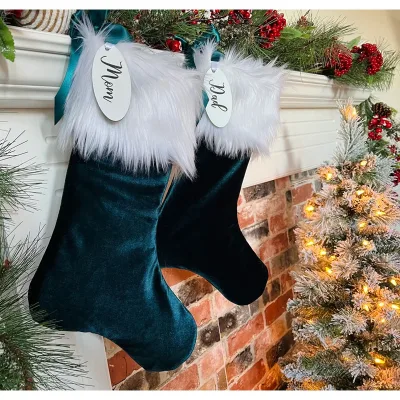
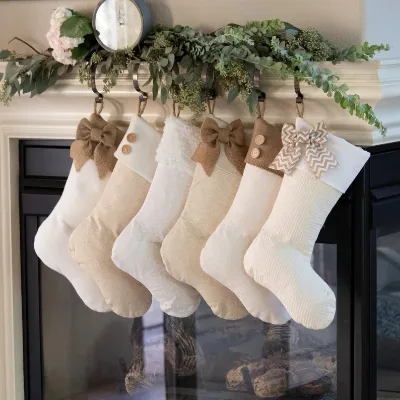
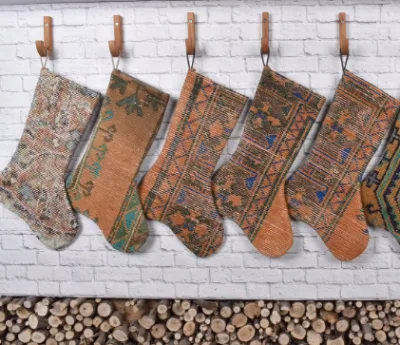
When sourcing eco-friendly vintage Christmas stockings, the primary objective is to identify products that balance aesthetic nostalgia with sustainable material composition. The available market data indicates a diverse range of specifications, with a predominant focus on polyester as a core material. While polyester is a synthetic fiber, its prevalence in the current supply chain suggests that buyers must scrutinize the specific manufacturing processes to determine if the "eco-friendly" claim is substantiated by recycled content or sustainable dyeing techniques. The observed product models, such as Fabric Christmas Stocking-051R and Velvet Christmas Stocking-fgyq1010, demonstrate that the vintage aesthetic is often achieved through specific textural finishes rather than solely through natural fibers like cotton or wool.
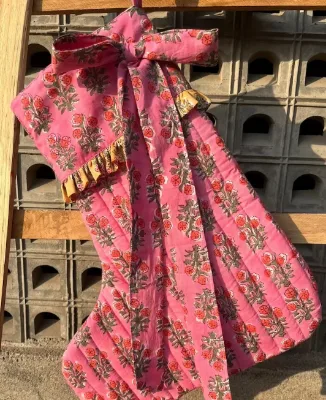
The material composition is a critical differentiator. Some listings explicitly cite "Quilted" as a material attribute, which implies a layered construction that may offer enhanced durability and a traditional, plush feel associated with vintage designs. In contrast, other entries list standard polyester, requiring the buyer to verify if the fabric is treated for environmental safety. The "Multicolour" and "Red" color options are standard, but the "As Pic Show" attribute suggests a high degree of visual customization. Buyers should note that the "Customized" status for size and color is a standard offering, allowing for bespoke vintage designs that match specific interior themes. However, the "Non Power" attribute confirms these are purely decorative items, eliminating the need for electrical compliance checks but emphasizing the importance of flame-retardant properties for indoor safety.
Compliance Verification and Certification Standards
Navigating the compliance landscape for Christmas decorations requires a rigorous approach, particularly when the core keyword includes "eco-friendly." The supplied context lists ISO 45001, OEKO-TEX, and GOTS as background standards, but these are flagged as low-confidence and should not be assumed as present in every product listing. Instead, buyers must treat these as verification targets rather than guaranteed attributes. The "customized" standard noted in the product data implies that compliance is often negotiated on a per-order basis rather than being a fixed factory-wide certification.
For a vintage stocking to be genuinely eco-friendly, the buyer must request specific documentation regarding the dyeing process and fiber origin. The "OEKO-TEX" standard, which tests for harmful substances, is a logical benchmark for textile safety, especially for items intended for children. The data confirms that these products are "Suitable for: Children," which elevates the necessity for rigorous chemical safety verification. Similarly, "GOTS" (Global Organic Textile Standard) would be the gold standard for organic fiber claims, yet the primary material listed is polyester. This discrepancy suggests that the "eco-friendly" claim may rely on recycled polyester (rPET) rather than organic natural fibers. Buyers should explicitly ask suppliers to confirm the percentage of recycled content and request third-party test reports to validate these claims before placing an order. The absence of explicit certification data in the product listings means that the burden of proof lies entirely with the procurement team to verify these standards through direct supplier communication.
Cost Drivers and Economic Parameters
Understanding the cost structure of vintage Christmas stockings is essential for budgeting and margin analysis. The observed price range in the market spans from USD 0.1 to USD 9.9, a wide variance that reflects differences in material quality, customization levels, and order volume. The "Sample Cost" is a significant initial expense, with observed figures of USD 50 and USD 60. This indicates that the cost of prototyping a vintage design is substantial, likely due to the labor-intensive nature of creating "Quilted" or embroidered details that mimic vintage styles.
The Minimum Order Quantity (MOQ) is another critical cost driver. The data presents a spectrum of MOQs, ranging from 100 pieces to 5,000 pieces, with specific listings showing 500 pieces and 300 pieces. This variability allows buyers to test the market with lower volumes but may result in higher per-unit costs. The "OEM" and "ODM" capabilities, marked as "Aceptable" and "Yes" in the data, suggest that custom branding and design work will incur additional fees beyond the base unit price. Furthermore, the "Customized" nature of the product means that every order may have unique tooling or setup costs.
Shipping and logistics also contribute to the total landed cost. The "Loading Port" is identified as Shanghai, and the "Shipment" options include "by Sea or by Air." For a product with a low unit price, sea freight is generally more economical for large orders, but the "Sample Time" of 7-10 days suggests that air freight might be necessary for urgent prototyping. The "prod_packing" specifications, such as "1 Piece/Polybag and 120 Pieces/Carton," indicate that packaging efficiency varies by model. Buyers should calculate the cubic volume of the cartons to optimize container loading and reduce freight costs, as inefficient packing can significantly erode the margin on low-cost items.
Typical Applications and Market Usage
The versatility of these stockings is highlighted by the "Application" attributes, which list both "Indoor" and "Outdoor" usage. While "Indoor" is the primary application, the "Outdoor" designation suggests that some models are treated for weather resistance, a crucial feature for "Christmas Decoation" in exterior settings. The "Occasion" is consistently noted as "Christmas Decoation" or "Christmas Day Decoratiom," confirming that these are seasonal items with a specific usage window. The "Usage" is further defined as "Christamas Home Decoration," emphasizing their role in residential settings.
The "Type" classification includes "Christmas Decorations" and "Christmas Stockings," with specific models like "Christmas Santa Stocking-057H" targeting traditional holiday themes. The "Kids Christmas Stocking-028U" model explicitly targets the children's market, aligning with the "Suitable for: Children" attribute. This dual focus on general home decor and specific child-oriented products allows suppliers to cater to different market segments. The "Style" is described as "Christmas Stocking," but the "Vintage" aspect of the core keyword implies a need for specific design elements such as embroidery, which is listed as a "Print" option in the data. The "Function" is broadly "Christmas Decro," indicating that the primary value proposition is aesthetic enhancement rather than utility.
Supplier Evaluation and Operational Capabilities
Evaluating suppliers for this specific product category requires a focus on their customization capabilities and production flexibility. The data confirms that "Customization" is "Available" and "OEM" is "Yes," indicating that suppliers are willing to adapt designs. The "brand_name" entries, such as "Family Gina" and "FG," suggest that some suppliers operate with their own branding, while others are fully OEM-focused. The "place_of_origin" is consistently "China," with specific mentions of "Zhejiang, China," a region known for textile manufacturing.
Buyers should verify the supplier's ability to handle the "Customized" size and color requirements without compromising quality. The "Sample Time" of 7-10 days is a standard metric for evaluating responsiveness. A supplier that consistently meets this timeline is likely to have efficient sampling and production workflows. The "Loading Port" of Shanghai is a major logistical hub, which generally ensures reliable shipping infrastructure. However, buyers should also assess the supplier's capacity to handle the "prod_packing" variations, such as the "1PC Stocking/Polybag, 200PCS/CTN" specification, to ensure that their logistics partners can handle the specific packaging requirements.
Quality Control and Long-Term Procurement Strategy
Quality control for vintage-style stockings must address both aesthetic consistency and material safety. The "Print" attribute, specifically "Embroidered," suggests that stitch quality is a key quality metric. Buyers should establish clear acceptance criteria for embroidery density and colorfastness, especially given the "Multicolour" nature of the products. The "Material" being "Polyester" or "Quilted" requires testing for durability, particularly if the stockings are intended for "Outdoor" use.
Long-term procurement considerations should focus on building a relationship with suppliers who can maintain consistency across large orders. The "MOQ" range of 100 to 5,000 pieces allows for a phased approach to sourcing, starting with smaller orders to validate quality before scaling up. The "Sample Cost" of USD 50 to USD 60 should be factored into the total cost of ownership, as multiple iterations may be required to perfect the vintage design. Buyers should also consider the environmental impact of the "Polybag" packaging mentioned in the data, potentially negotiating for more sustainable packaging solutions to align with the "eco-friendly" core keyword.
Comparative Analysis of Product Attributes
To facilitate decision-making, the following table summarizes key attributes observed in the supply data, highlighting the variations buyers must navigate.
| Attribute Category | Observed Values | Procurement Implication |
|---|---|---|
| Material | Polyester, Quilted | Verify recycled content for eco-claims; check quilted durability. |
| Customization | Customized (Size, Color) | Essential for vintage aesthetic; confirm setup costs and lead times. |
| MOQ | 100, 300, 500, 5000 pcs | Lower MOQs increase unit cost; higher MOQs improve margins. |
| Sample Cost | USD 50, USD 60 | High initial cost; budget for multiple iterations. |
| Application | Indoor, Outdoor | Verify weather resistance for outdoor use; flame retardancy for indoor. |
| Target Audience | Children, Home Decoration | Ensure safety compliance for children's items; aesthetic appeal for adults. |
| Origin | China (Zhejiang) | Standard manufacturing hub; verify logistics reliability from Shanghai. |
| Packaging | 1PC/Polybag, 120-200/CTN | Optimize carton volume for shipping efficiency. |
Conclusion
Sourcing eco-friendly vintage Christmas stockings requires a meticulous approach that balances aesthetic desires with rigorous compliance and cost management. The available data reveals a market dominated by polyester and quilted materials, with significant customization options available from Chinese suppliers. While the "eco-friendly" claim is present in the core keyword, the actual material composition and certification status must be verified through direct supplier engagement, as the provided data does not guarantee specific organic or recycled standards. By focusing on material integrity, verifying safety certifications for children's products, and optimizing logistics through efficient packaging, buyers can successfully navigate this market. The wide range of MOQs and sample costs necessitates a phased procurement strategy, allowing for quality validation before committing to large-scale production. Ultimately, the success of this sourcing initiative depends on the buyer's ability to translate the "vintage" aesthetic into tangible product specifications while maintaining the highest standards of environmental and safety compliance.
FAQs
What materials are used for eco friendly vintage christmas stocking production?
Most products use polyester or quilted fabric to achieve the vintage aesthetic. Buyers must verify if the polyester contains recycled content to substantiate eco-friendly claims, as natural fibers like cotton are not the primary material listed.
Can I customize the size and color of these vintage stockings?
Yes, customization for size and color is available for most models. The product specifications confirm that sizes are customized and colors include options like red or multicolour, allowing for bespoke designs to match specific interior themes.
What is the minimum order quantity for these Christmas decorations?
Minimum order quantities vary significantly between 100 and 5000 pieces depending on the supplier. Specific listings show MOQs of 100, 300, and 500 pieces, so buyers should check individual supplier terms to find a volume that fits their budget.
How long does it take to receive a sample of the stocking?
The sample time is typically 7 to 10 days for production. Buyers should budget for sample costs ranging from USD 50 to USD 60, which are substantial initial expenses required to prototype the vintage design before placing a bulk order.
Are these stockings suitable for use with children?
Yes, the products are explicitly listed as suitable for children. This classification requires rigorous verification of chemical safety and material compliance, especially since the primary material is polyester and the items are intended for home decoration near kids.
Which certifications verify the eco-friendly status of these stockings?
Certifications like OEKO-TEX or GOTS are not guaranteed in the standard listings and must be requested directly. Buyers should treat these as verification targets rather than fixed attributes and ask suppliers for third-party test reports to validate safety claims.
Where are these vintage stockings manufactured and shipped from?
Products originate from China, specifically Zhejiang, and ship from the Shanghai port. This location is a major manufacturing hub, and buyers should plan logistics for sea or air freight to optimize costs for the low unit price items.